Year: 2010

Behind the Scenes Tour of the Mount Vernon Mill

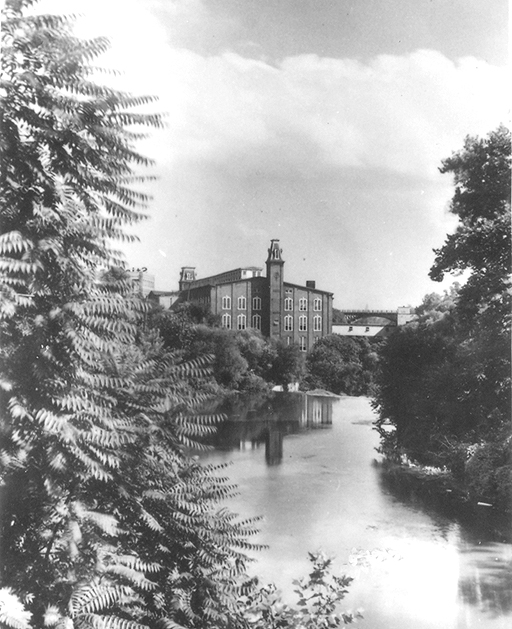
Image courtesy Baltimore County Public Library

In the 19th century, Baltimore was the world’s leading supplier of cotton duck, a material that was used in items from uniforms and tents to sailcloth and parachutes. Much of it was made at a sprawling complex of mill buildings collectively called the Mount Vernon Mill. Our host, Terra Nova Ventures, has cleaned out the Mount Vernon Mill No. 1 building and is about to embark on a massive historic restoration and reuse project. Please join us on a “before rehab” tour of this great historic industrial space.

Tour Information

Date:   Wednesday, November 10, 2010
Time:   5:30 p.m. to 6:30 p.m.
Place:  Mount Vernon Mill (2980 – 3000 Falls Road, Baltimore 21211)
The building is on Falls Road just north of Wyman Park Drive and the Stieff Silver Building
Cost:   $15 (includes wine and cheese reception)
Registration: Click Here to Register.

Read more

Baltimore Heritage nominated for The Mobbies

The Baltimore Heritage blog has been nominated for The Mobbies 2010 competition–a ten-day competition where you can vote for “Maryland’s Outstanding Blogs.” We are up for the best Neighborhood Blog, along with a number of great neighborhood news and Main Street sites. If you aren’t a regular Baltimore Heritage reader, a sampling of our posts include our May update on the history of the Hebrew Orphan Asylum, our recent feature on the Baltimore Heritage award-winning Northern District Police Station, and our continuing efforts to keep you informed about important preservation issues, such as the controversial Mount Vernon Place Restoration Master Plan.

Voting opened today, November 2 and continues through through November 12, concluding with an awards bash at RA Sushi Restaurant Bar on November 16. You can vote once for every 24-hour period, so please vote early and vote often.

2010 Preservation Awards: UB Liberal Arts and Policy Building

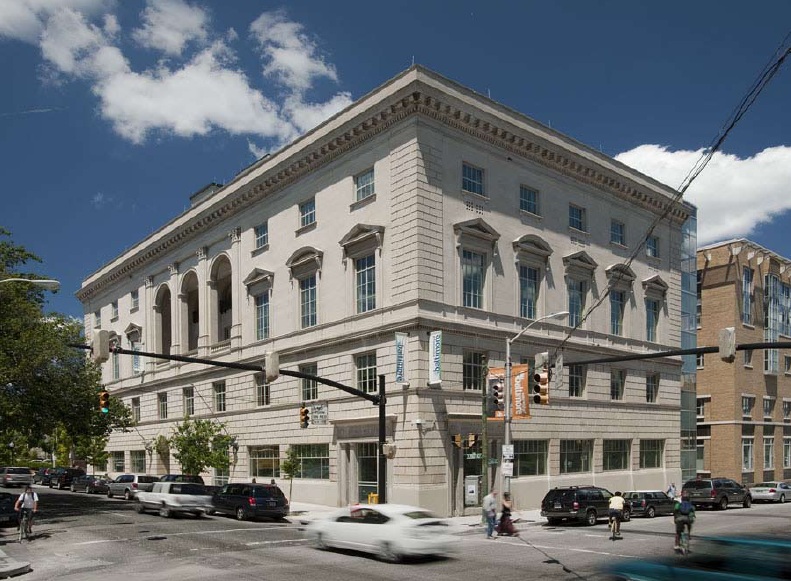
Image courtesy Cho Benn Holback + Associates

The University of Baltimore’s Liberal Arts and Policy Building at 10 W. Preston Street originally housed the Knights of Pythias, a fraternal secret society founded in 1894 and the first such society to be incorporated under an act of Congress. The co-educational institution, University of Baltimore, acquired the building and undertook an extensive renovation project in which the original stained glass and spiral stairs were restored, as was the limestone fronts along Charles Street. The work even uncovered the original tile floor, which was cleaned and reused. The University of Baltimore is the owner and Cho Benn Holback + Associates was the architect.
Read more

Baltimore Building of the Week: Penn Station

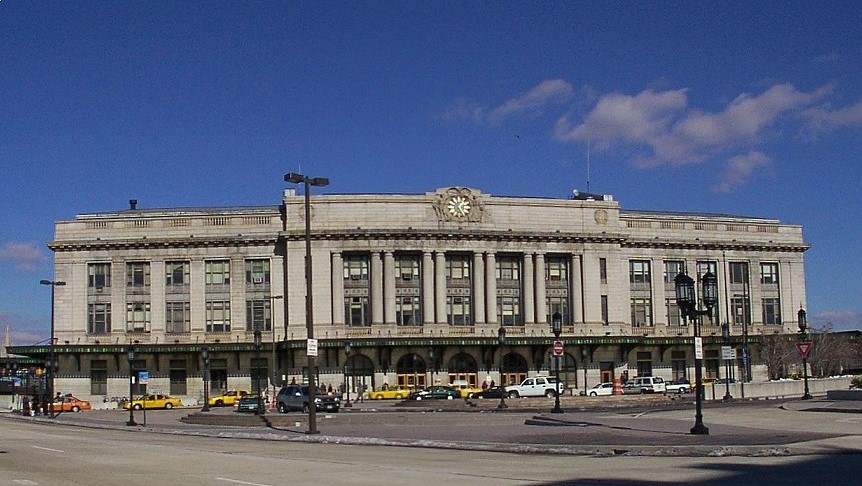
This week’s Baltimore Building of the Week for Dr. John Breihan includes a great photo of the historic Penn Station prior to the installation of the controversial Man/Woman sculpture–

Image courtesy Jack Breihan

Louis Sullivan’s skyscraper style (as seen in Baltimore’s Equitable Bank Building featured last week) made full use of modern steel-framed construction and electrical appliances like elevators. But in the 1890s it was superseded by a style with equally advanced technology but not based on Sullivan’s famous pronouncement that “Form follows function.” Inspired by – and named after – the great French architecture school, the Ecole de Beaux-Arts, this new style combined modern steel-framed construction with historical European styles. Penn Station, completed in 1911, is a good example. Planned to handle several streams of travel on several different levels, it nevertheless presents a serene classical façade to viewers approaching up Charles Street – balustrade roofline, modillioned cornice, paired Roman columns, rusticated stone base. The equally classical interior has undergone several restorations since the 1970s. In the 1990s a connection to Baltimore’s new light rail system was added. As it approaches its 100th birthday Penn Station shows how old buildings, well maintained can continue to serve the community.

2010 Preservation Awards: Professional Arts Building

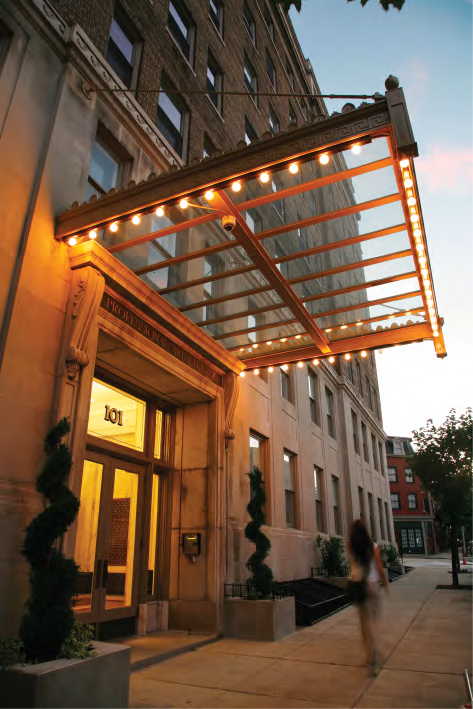
Image courtesy Kann Partners

Originally constructed as the “Medical Arts Building” in 1927, the Professional Arts Building at 101 West Read Street served as offices for medical personnel until it saw a decline in occupancy in the 1990s. The large 110,000 square foot building was left more than seventy-five percent vacant for a decade prior to its rehabilitation in 2009. Restoration work included repairing the original terra cotta balustrade, refurbishing the main lobby and elevator lobbies in the upper floors, and restoring the storefront on Cathedral Street. Kann Partners was the architect and Struever Bros. Eccles & Rouse were the builders.
Read more