
Cubanola 5¢ Cigars & N. Faulstich Carriage & Wagon Builder Sign

When you gaze at this vibrant ghost sign, you will immediately notice the word “CUBANOLA” printed across the side of the building. Cubanola was a cigar made by the American Tobacco Company and manufactured in cities such as New York, Philadelphia, and Camden, New Jersey. If you look closely, you will also notice large, faded white lettering underneath the Cubanola advertisement. A few of the ghost signs around Baltimore are these “double signs,” where one sign was painted over another and parts of each remain.
The American Tobacco Company
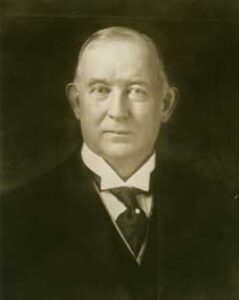
The American Tobacco company originated when Mr. Brodie Duke moved to Durham, where he began to produce smoking tobacco in 1869. Five years later Brodie’s father, Washington, and his brothers James B. and Benjamin N., moved to Durham and combined forces with Brodie to build a tobacco factory for their joint use.
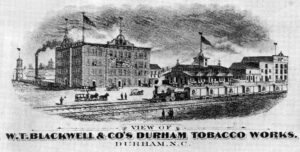
The leading manufacturer of smoking tobacco in Durham at the time was the William T. Blackwell Company, with its famous Bull Durham label. However, in the early 1880s, James Bonsack of Virginia invented a machine that could mass produce cigarettes. Before the end of the decade, James B. Duke and his brothers had gained exclusive control of the Bonsack machine. The Dukes soon had a monopoly on the entire American cigarette industry.
 By 1906 the American Tobacco Co. controlled four-fifths of the entire domestic tobacco industry, other than cigars. James B. Duke would eventually fund and create Duke University in Durham N.C. using the money gained from the tobacco industry.
N. Faulstich Carriage & Wagon Builder
 If you look closely at the top of this ghost sign you will see the words N. FAULSTICH CARRIAGE & WAGON BUILDER printed on the top right side of the building. This was a wagon making company, located in Maryland since at least 1914. The smaller, plain white lettering indicates to us that this was a common example of an outside company paying the owner of a building for wall space. In return for providing wall space, the owner of the building would typically receive a smaller advertisement depicting their own business.
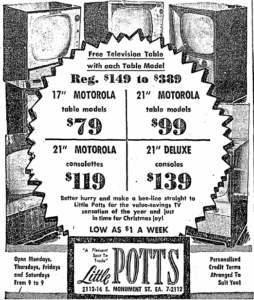
After the wagon making company departed from the building it was used as a warehouse for a company called “Little Potts Co.,” which sold a mix of washing machines, televisions, and porch gliders.